
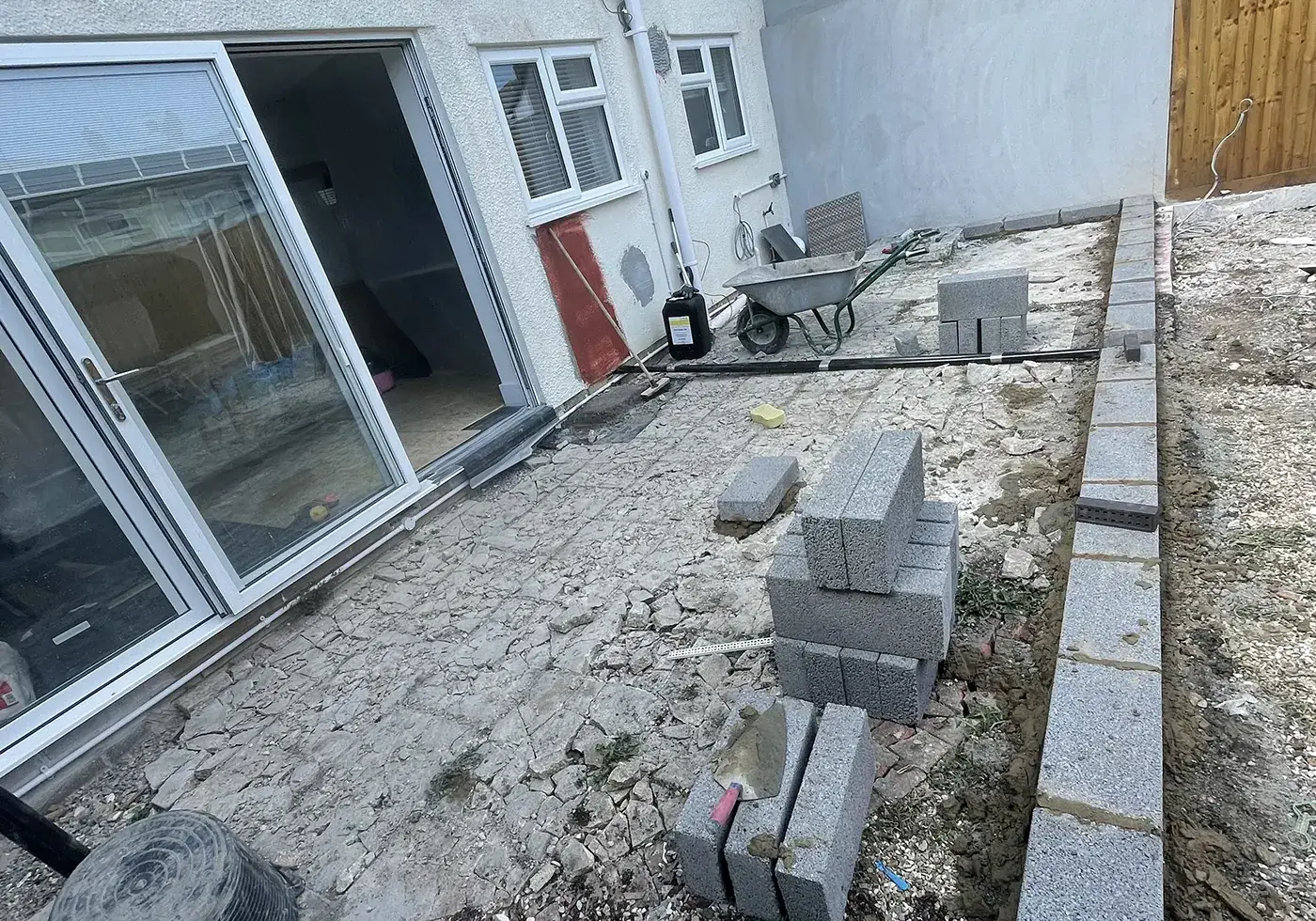
A patio can look sharp on the day it is laid and still fail later if the layers beneath it are inadequate. When we lift old patios for replacement, we frequently find very little sub-base, no separation membrane, poor compaction or slabs that were not properly bonded to their bed. In Glen’s experience, some combination of these problems appears on roughly nine out of ten replacement patios the team takes up. That is what we have seen on our jobs, not a survey of every patio.
Start with the ground you actually have
There is no one excavation depth that suits every garden. Heavy clay, sandy ground and soft or disturbed areas behave differently. We assess the ground, intended use, levels and drainage before choosing the depth and build-up for the job. A patio alongside the house also needs careful consideration of thresholds and where rainwater will go.
Build and compact the sub-base in layers
We use quarried Type 1 aggregate and compact it in layers with a substantial diesel-powered plate compactor suited to the work. That takes time, but loose or inadequately compacted material can settle after paving is installed. The required depth and equipment depend on the conditions and design; the weight of a machine alone does not prove a patio meets a particular standard.
Why we include a geotextile
Our usual build includes a suitable permeable geotextile between the prepared ground and the aggregate. Its job is to help keep those layers separate, particularly where softer ground could mix with the sub-base and weaken it. It is one part of a sound construction, not a cure for clay movement, frost heave or poor drainage. We still design the base for the ground we find.
Bond the paving and choose the joints with care
We prime the backs of paving slabs with a compatible slurry primer as part of our installation method. This helps the paving bond to the mortar bed. Materials and manufacturers' instructions matter, particularly with porcelain and natural stone. We also specify jointing for the paving and the way it will be used. A low quote may allow for a single-part brush-in compound where we would propose a different jointing system; that is worth asking about before comparing prices. Neither the jointing nor the primer makes up for an unstable base.
Questions to ask before accepting a quote
- What will be removed, and how will the existing ground be assessed?
- Which aggregate and sub-base depth are proposed for your garden?
- Will the aggregate be compacted in layers, and with what equipment?
- Is a geotextile included, and where will it be laid?
- How will the paving be bonded and the joints finished?
- Where will surface water drain?
A useful quote should make the hidden work clear. You can then compare the proposed build, not just the square-metre price and the colour of the slabs.
Planning a patio in Bristol or the surrounding area?
Tell us about your gardenHow we build patios ↗See a completed patio ↗