
We are often asked which patio material is “best”. There is no single winner. Porcelain is easier to wipe clean, limestone develops character as it ages, and sandstone offers plenty of natural variation. None is maintenance-free in a damp English garden. Here is the honest conversation we have with customers before they choose.
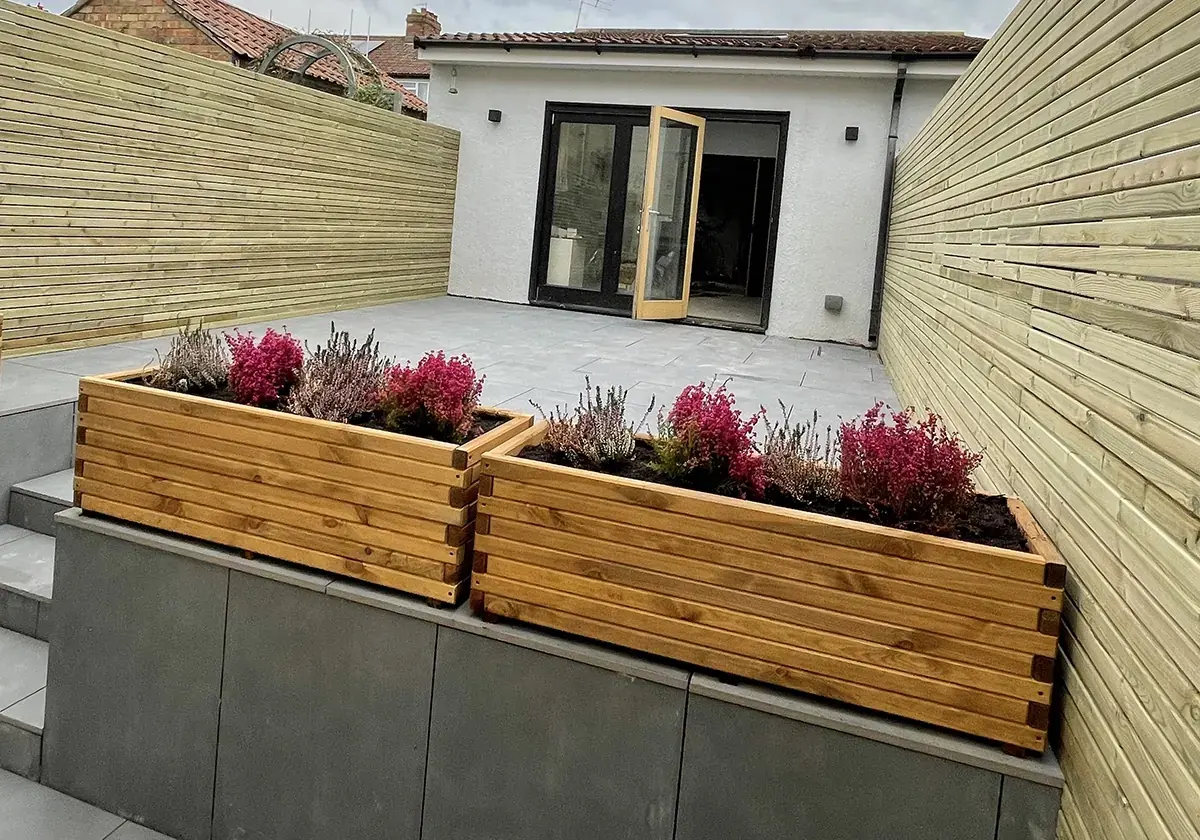
Porcelain: easy to clean, not immune to the weather
Porcelain is dense, absorbs very little water and is generally resistant to staining. Its consistent finish suits a contemporary garden, and routine cleaning can be straightforward. We think it is an excellent option for customers who like a crisp, even appearance.
What we do not promise is “no maintenance”. Leaves, soil and other debris still sit on the surface, and shaded or damp areas can develop a slippery film if that build-up is left in place. Clear leaves, wash the paving with a cleaner suitable for the product and take care with any pressure or chemicals recommended by its manufacturer. Choose outdoor-rated porcelain with an appropriate slip-resistant finish.
Because surface water needs somewhere to go, we plan the fall and its destination before laying the patio. On suitable sites we may work around a fall of about 1 in 60—roughly 17 mm per metre—but the right gradient and drainage detail depend on levels, thresholds, accessibility and where the water can discharge. A single figure cannot be prescribed for every garden.
Limestone: a natural stone that grows into its setting
Good limestone has a quieter, more lived-in character than porcelain. Glen particularly likes how it ages in an English garden: the texture and colour can sit comfortably beside older walls, planting and newer extensions alike. It needs sensible ongoing care and may change tone as it weathers. Its exact porosity, finish and maintenance needs depend on the particular stone, so we always discuss and, where possible, show the actual product.
We are cautious about selling a customer black limestone solely on its deep colour when freshly laid. Some black limestone products can lighten, grey or become patchy outdoors. If you want that dark look, it is worth seeing weathered examples and asking the supplier how that specific stone is expected to change before committing.
Sandstone: versatile, with more variation and upkeep
Sandstone is a flexible choice for traditional and modern gardens. It offers natural variation, can work at a range of price points and, with suitable cleaning, can be brought back to a fresh appearance after a tired spell. The finish and quality of the particular sandstone make a real difference.
It is generally more absorbent than porcelain, so expect to spend more time keeping staining, leaves and organic growth under control. A textured sandstone can provide useful grip, but we would never call any patio automatically non-slip when wet: algae, leaf residue, surface finish and maintenance all affect how safe it feels underfoot. We select the stone and cleaning approach with those conditions in mind.
So which would we choose for you?
- For a clean, consistent finish: consider suitable outdoor porcelain if you are happy to clear debris and clean it regularly.
- For natural character: look at limestone, including how your chosen colour will weather.
- For variety and a flexible budget: compare good-quality sandstone samples, while allowing for a little more upkeep.
We also ask how much shade the area gets, who will use it, what is beneath the paving, how rainwater will drain and how you want the patio to look five years from now. Those answers matter more than a showroom photo.
Considering a new patio around Bristol?
Tell us about your gardenExplore our patio work ↗Read about patio foundations ↗